Trust data, not words. Check any car’s history in seconds
A report can uncover:
- Recorded images
- Damage
- Theft records
- Financial restrictions
- Natural disaster exposure
- Safety ratings
- Market value
- Emission taxes
- Specs & equipment
- Mileage rollbacks
- and more...
Why smart car buyers start with carVertical
A carVertical vehicle history report is your first step to knowing what's worth your money, what's worth your time, and what makes the best final choice.
Avoid expensive mistakes
Spot past damage, mileage rollbacks, or other costly issues early – and walk away from money pits that could cost you thousands later.
Find the right car faster
Avoid pointless test drives by checking the facts online and only inspecting the cars that are actually worth your time.
Know more, pay less
Learn the car's story, know more than the seller expects, and use the facts to get a better price.
We check what sellers won’t tell you
carVertical scans over a billion verified records, to help you lower the risk of buying a used car – in just 40 seconds.
Spot damage & write-offs
We check over 330 million records to show you where and when the damage occurred.
Verify actual mileage
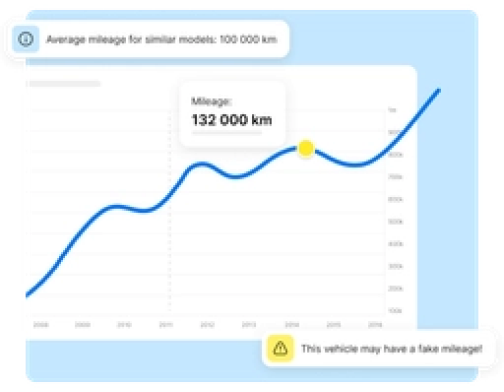
Easily verify a vehicle's mileage backed by trusted data sources.
Get to know the car inside & out
See the technical details and original equipment features.
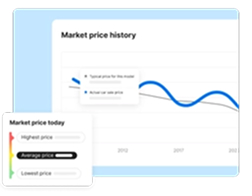
Know what it's really worth
Compare the price against similar cars in your area.
Avoid cars with branded titles
Identify salvage or junk titles before buying.
See if the car is safe to drive
Check crash-test safety ratings from trusted agencies.
Bundle deal: Save up to 40%
Get a vehicle history report bundle – check more cars for less, ,compare their histories, and choose the best option.
Most Popular

Standard
Most value for regular users
How its works
Learn what we check, how fast it happens, and what you get in return:

Enter the car’s VIN or REG
Start by entering the 17-character VIN or vehicle registration number (REG) – both allow us to track its entire history.

We’ll check verified data worldwide
We’ll scan 1000+ data sources across 45+ countries – including
insurance, police, and registration data – to reveal any hidden
problems.

Pay and unlock your full vehicle history report
After payment, generate reports to see the car’s history – your full
report will be ready in just 40 seconds.

Let data guide your decision
Use the car history report to decide whether to buy the car, negotiate a better price, or keep looking.
Turning data into smarter choices
In 2025, we’ve helped millions of drivers navigate the car market with intelligence and
confidence.

4,700,000+
Vehicles checked

142,494
Checked Vehicle Found

1,997,9282
Damaged vehicles detected
Hear from people like you
See why they’re using carVertical to make smarter car deals.

Very reassuring before purchasing a used vehicle. The site offers many ways to connect with various verification structures. Very detailed and complete report.

Very reassuring before purchasing a used vehicle. The site offers many ways to connect with various verification structures. Very detailed and complete report.

Very reassuring before purchasing a used vehicle. The site offers many ways to connect with various verification structures. Very detailed and complete report.
Frequently asked questions
1. How does the carVertical service work?
carVertical helps you uncover a vehicle’s history by collecting data from trusted sources worldwide, and compiling it into an easily-readable vehicle history report.
How are carVertical reports created?
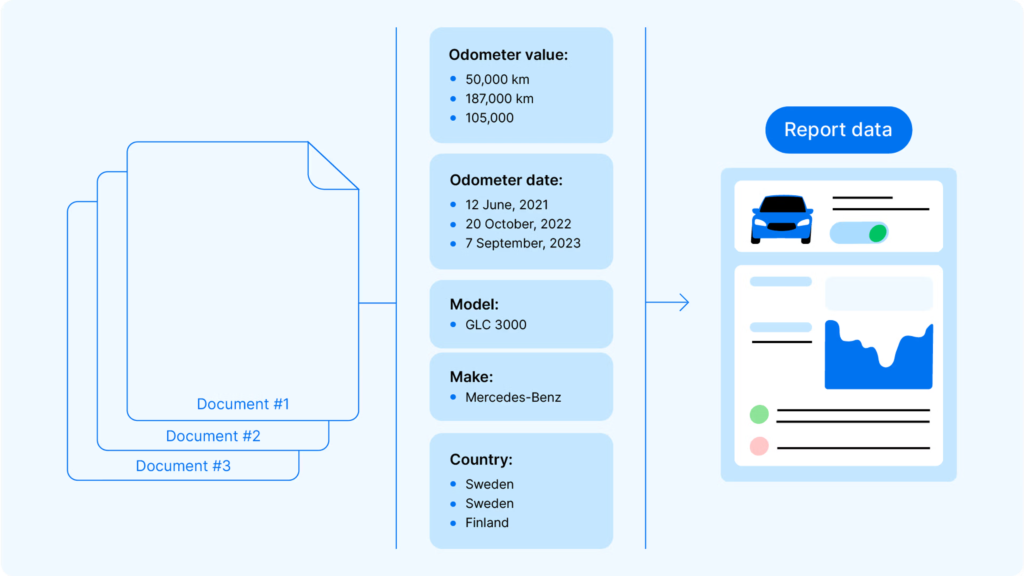
Our system gathers data from over 1000 sources, including government registries, damage data databases, law enforcement agencies, and more. Here’s how it works:
A
VIN
(Vehicle Identification Number) is a unique 17-character code assigned to every vehicle.
It serves as the car’s fingerprint, containing essential information about its history.
When you enter a VIN on our website, our system uses it to search for records in various databases across 45+ countries. We typically check:
- State registries
- Damage databases
- Law enforcement agencies
- Auto repair shops & service logs
- Connected vehicle fleets, and more.
2. carVertical cleans and sorts collected data
The data we receive from these sources is typically raw and requires several steps of processing. We fix errors and inconsistencies, translate the data (if necessary), and sort information into relevant categories.
3. We assign the data into relevant report sections
Once we gather all available records, we group information types into our report sections.
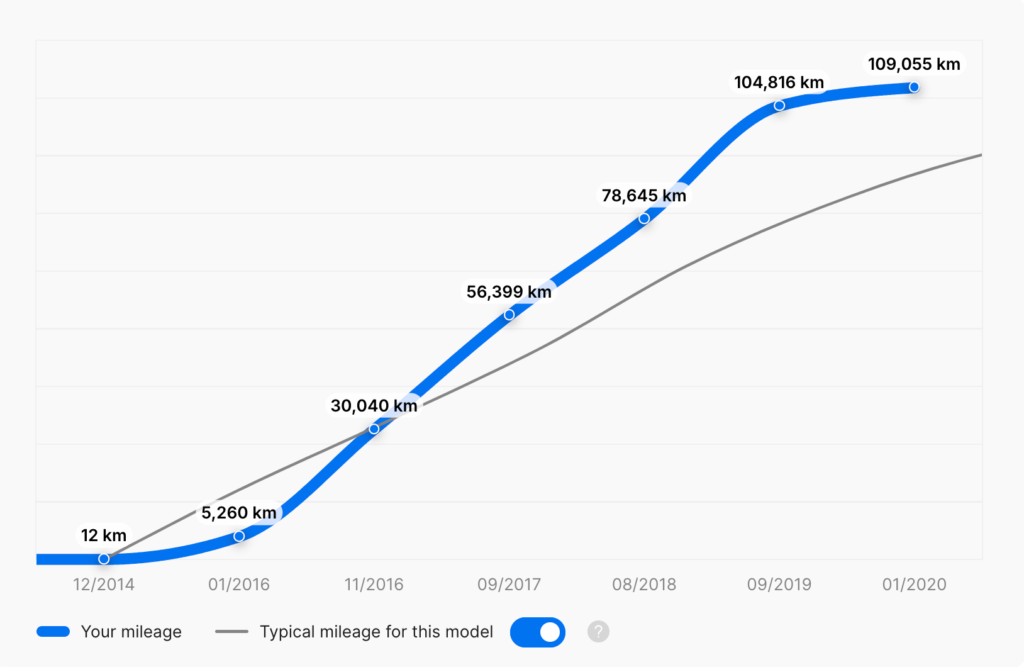
For example, if we have 3 odometer readings and the dates when they were taken, they will appear in the Mileage section of the report. Meanwhile, the technical inspection information will be in the Legal status and Timeline sections, etc.
4. We use statistical models and insights to enrich the report
The data has been processed for the carVertical report, but further work is needed using statistical models and other technologies to refine and enhance it. These models help provide insights, such as comparing a car’s mileage with similar vehicles.
5. You receive a comprehensive vehicle history report
Within minutes, your report is ready!
You can review it online, download it as a PDF, and use it to make a well-informed decision before purchasing a used vehicle.
2. What is a VIN ?
A VIN, or Vehicle Identification Number, is a unique 17-character code assigned to every vehicle. It acts as a fingerprint, providing important details about the car, including its manufacturer, model year, production location, and unique serial number.
The VIN is also essential for verifying a vehicle’s authenticity, tracking key events throughout its lifetime, and ensuring it has not been stolen or tampered with.
Where can I find the VIN?
You can locate the VIN on both the vehicle itself and its official documents.
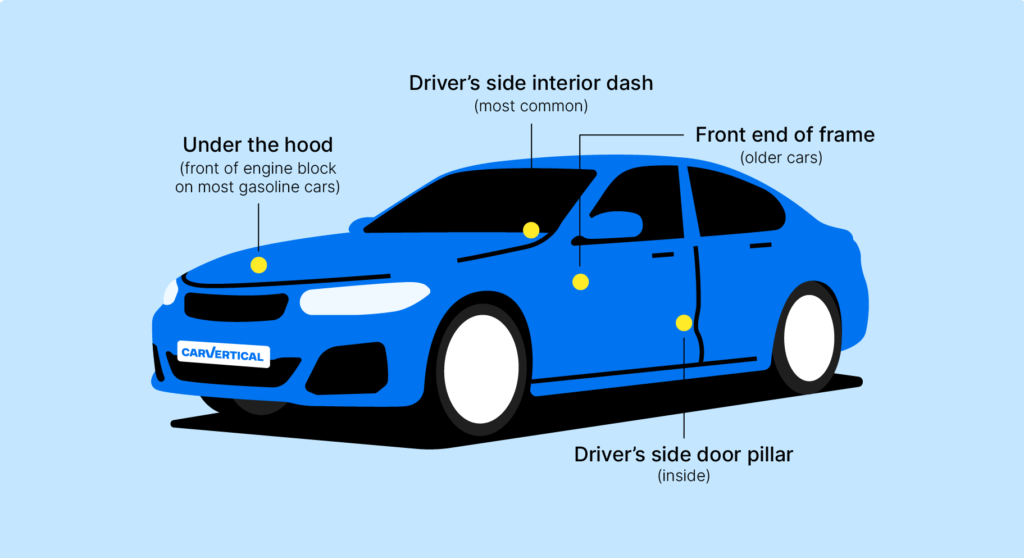
On a car:
- Dashboard – Check the driver’s side near the windshield.
- Driver’s side door pillar – Look along the side pillar of the driver’s door frame, often near the door hinge.
- Front end of the frame – Check the frame near the front of the vehicle, often on the driver’s side, near the wheel well.
- Under the hood – Some manufacturers place the VIN near the engine block
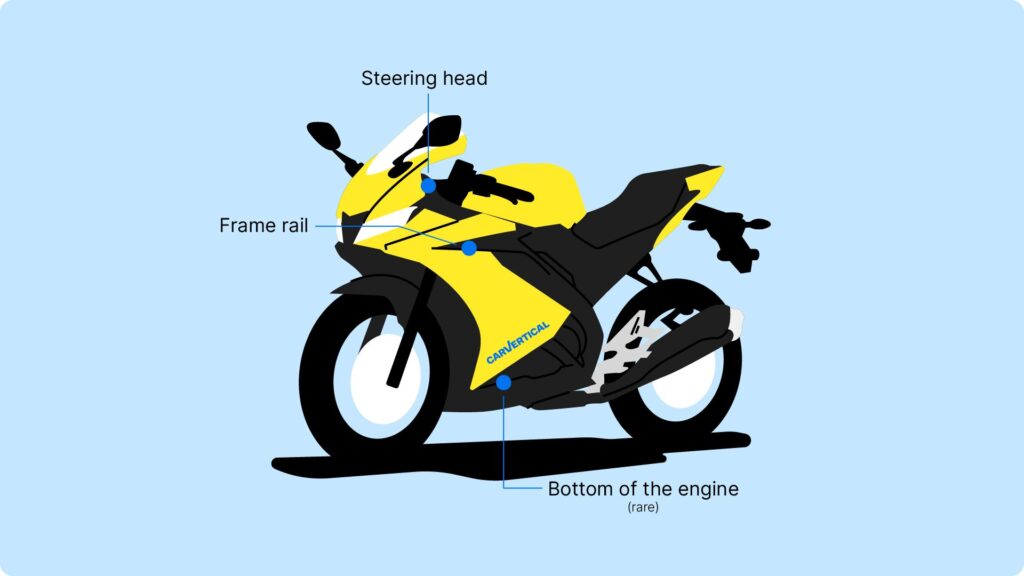
On a motorcycle:
- Steering head (most common) – Typically stamped or engraved on the steering head of the motorcycle, which is the part of the frame that connects to the front fork.
- Frame rail – Some motorcycles may have the VIN located on the frame rail, which is a structural part of the chassis running along the sides of the bike.
- Bottom of the engine (rare) – In rare cases, the VIN may be stamped or engraved on the bottom of the engine.
Tip: The VIN is also printed on official vehicle registration, insurance, and ownership documents. Always ensure the VIN on the vehicle matches the one on the paperwork.
How to decode a VIN
A VIN can be decoded automatically using a VIN decoder or manually by breaking down its structure.
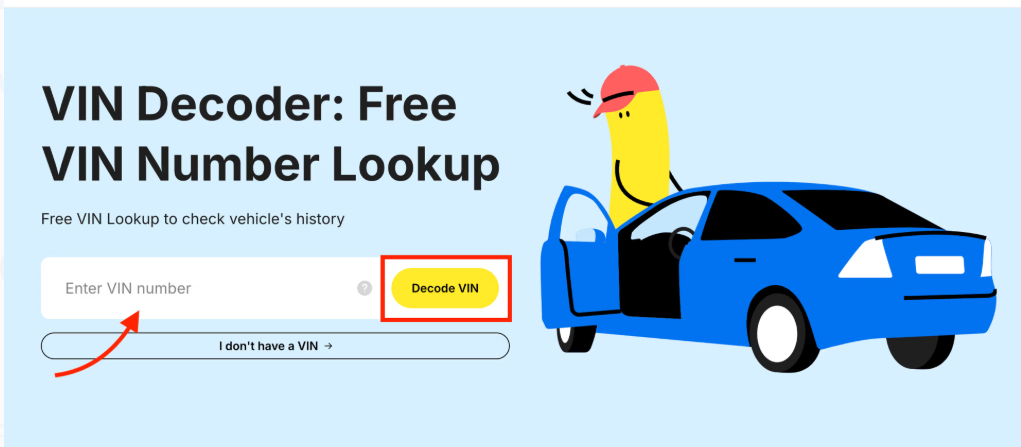
1. Use a carVertical VIN decoder
Just enter the VIN into the carVertical VIN decoder and click Decode VIN.
2. Decode manually
You can also decode a VIN manually if you know what each character represents. However, this can be time-consuming, as manufacturers use different encoding systems for vehicle details.
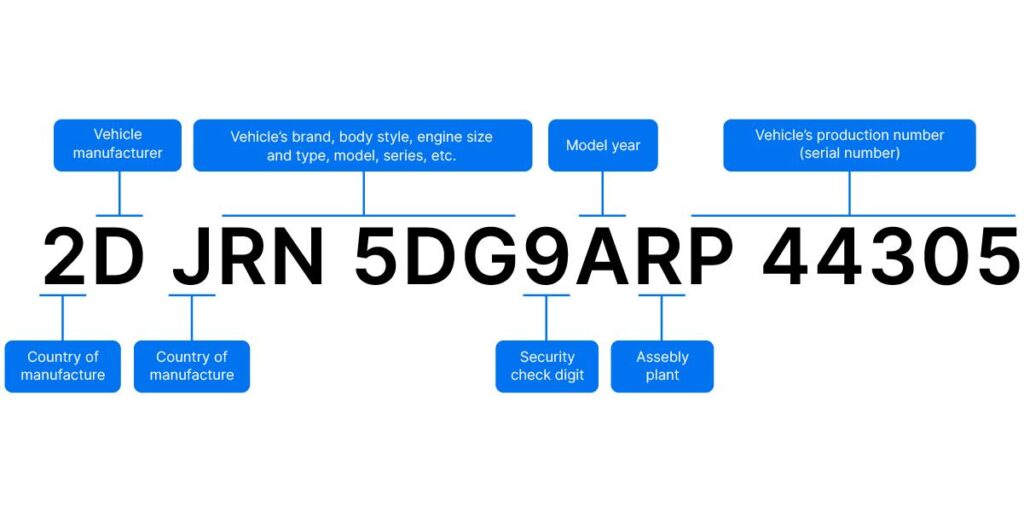
VIN structure breakdown:
- WMI – World Manufacturer Identifier (Characters 1-3): Typically identifies the vehicle’s manufacturer and country of origin.
- VDS – Vehicle Descriptor Section (Characters 4-8): Reveals the vehicle’s brand, body style, engine size, and model type, and similar details.
- Check Digit (Character 9): A security code calculated using a mathematical formula to validate the VIN’s authenticity.
- VIS – Vehicle Identifier Section (Characters 10-17): Characters 10 and 11 indicate the model year and assembly plant, while characters 12 to 17 represent the vehicle’s unique serial number.
How to spot a fake or tampered VIN
A legitimate VIN should always be consistent, clear, and match official records. Here are key warning signs that a VIN might be fake or altered:
- Missing or altered characters
- Physical tampering signs (cratches, uneven paint, altered VIN plate)
- Unusual characters (includes I, O, or Q)
- VIN location mismatch (unusual or non-standard location)
- Check digit mismatch (doesn’t match the calculated value)
- Non-matching documents (VIN on the vehicle doesn’t match the one on its documents), etc.
Always verify the VIN before purchasing a used vehicle to avoid scams.
3. How long will it take to receive my carVertical report?
carVerticals reports are generated almost instantly! You’ll usually receive your report in about one minute or around 40 seconds, to be precise. Our system operates 24/7, allowing you to generate your report anytime, day or night.
Once your report is ready, it will be available in your carVertical account and delivered directly to your email.
4. What information may appear in the carVertical report?
Our data comes from over 1000 trusted sources, including state registries, law enforcement agencies, service records, and other databases. Each report may include different sections depending on the data available for a specific vehicle.
Below is an overview of the key sections that may appear in your report. You can also view a sample report to see what’s typically included and how it looks.